Sending a radio signal with no electricity at all
A maker's water-and-air transmitter strips radio down to its bare principles: modulation, a slotted disk, and a horn to listen.
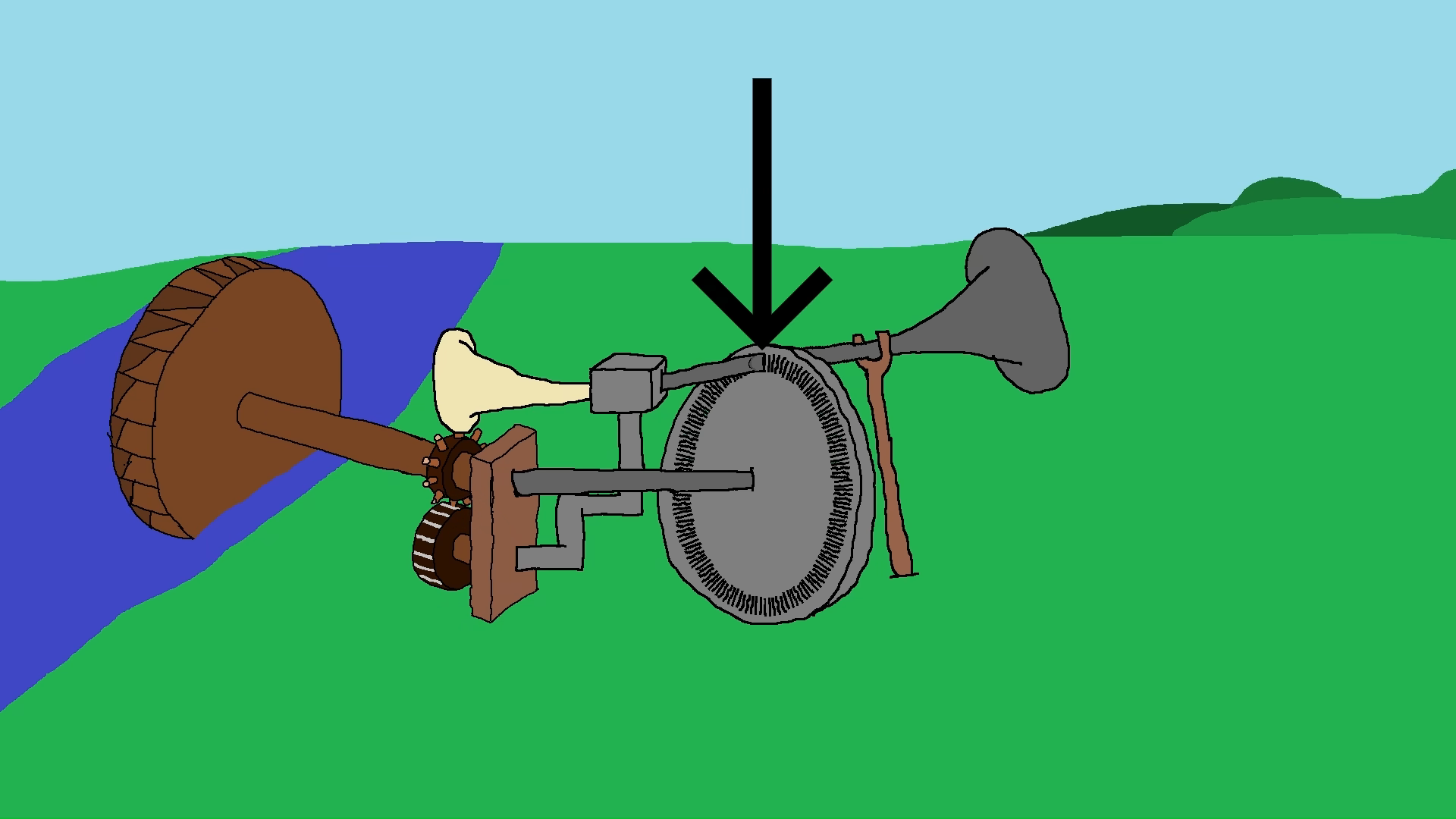
Could you send a radio signal with no electricity at all? A maker known as [The Mike Stuff] thinks the ancient Greeks could have, and has sketched a radio built entirely from moving parts, no batteries, no circuits, no power of any kind. Writing for Hackaday on 1 October 2026, Al Williams laid out the proposal, which trades every electronic component for water, air and a spinning disk.
The claim is deliberately provocative. As Hackaday put it, "He asserts that ancient people like the Greeks could have built a form of radio that was purely mechanical." With no electricity to harness, every part of the system has to do its job through moving air and falling water instead, and the exercise is less about the hardware than about what a signal actually is.
The design starts with a waterwheel. According to the article, the wheel compresses air, which is then blown through a rotating disk cut with slots. As the disk spins, the slots chop the airflow into a steady stream of pulses, the raw carrier, produced by nothing more than falling water and a turning wheel.
To carry a message, that stream has to be shaped. A valve amplitude-modulates the airflow, varying its strength the way an AM station varies the power of its carrier wave. That is the heart of the idea: strip radio down far enough and modulation is just a way of pushing information onto a regular signal, whatever the signal happens to be made of.
Receiving it is where the scheme gets elegant. Gramophone-style horns amplify the signal at both the sending and receiving ends, and the article says demodulation in this design needs no power source at all. The horn does the work a powered circuit would otherwise do, pulling a faint pattern back into something an ear can follow.
Williams calls the idea buildable in theory but impractical. He writes that controlling the speed of the slotted disk with water power would be a challenge, and the speed is what sets the signal's frequency. Mike himself says the result would not be very good, predicting that listeners would mostly hear a 10 kHz buzz.
Hackaday framed the piece as a fun thought experiment rather than a working device. Williams wrote that even if it were possible, he was sure it would have sounded awful, and the article does not report that anyone built a prototype.
The value is in the thinking. Working out how a signal could be sent and received with no electricity forces you to separate radio's principles from its hardware: a carrier, a way to modulate it, and a way to pull the message back out. Those ideas do not depend on electronics, they are just easiest to build with them. A waterwheel and a horn make the same point the hard way.
Sources
- A Mechanical Radio, Sort Of · Hackaday