Most states label political deepfakes, but labels barely change who shares them
A label says how a clip was made, not whether it is true, and voters share it anyway.
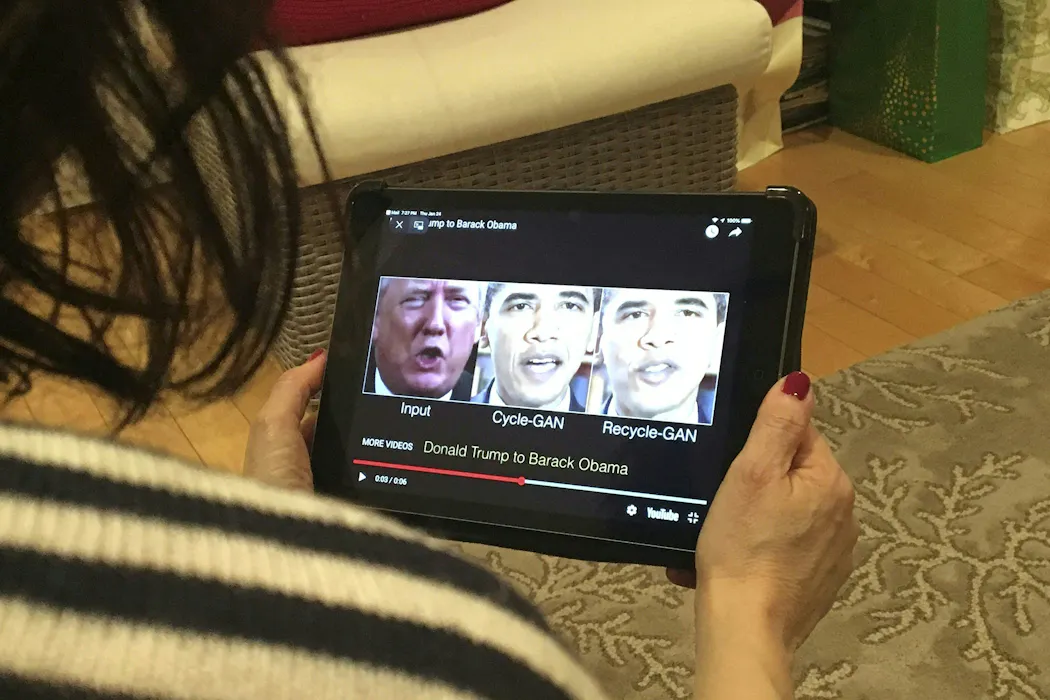
Most US states that regulate AI-generated political content have settled on a single tool: a label. Writing in The Conversation on 30 September 2026, Stefani Langehennig, an assistant professor of practice at the University of Denver, reported that 31 states had election deepfake laws as of June 2026, and 28 of them require a disclosure telling viewers the content was made or altered with AI.
The catch, Langehennig wrote, is what a label does and does not say. "The warning tells voters how the content was made, not whether its accusations are true." A disclosure flags the method, not the claim, a clip can be honestly labelled as AI-made and still carry a false accusation.
Research she cited suggests labels do little to stop the content from spreading. A 2025 study of 7,579 Americans found that people shown AI-generated content with warning labels were sceptical of its claims but changed their sharing behaviour only minimally. In another study, people rated headlines marked as AI-generated as less accurate regardless of whether they were actually true.
Three states, Maryland, Minnesota and Texas, go beyond disclosure and prohibit certain deepfakes outright. Maryland's law, enacted in May 2026, bans deceptive election deepfakes even when they carry an AI warning, if they are made to spread materially false information with intent to influence voting. Penalties reach $5,000 or five years in prison, and election officials can publicly correct the misinformation.
Louisiana shows the more common approach. Its law, enacted in June 2026, requires AI disclosure warnings on campaign ads that falsely depict candidates and on robocalls using artificial voices of public figures. It excludes candidates for federal office and carries fines of up to $2,000 or two years in prison.
Labelling has a precedent: Langehennig noted a 2023 Republican National Committee ad attacking President Biden that was marked "Built entirely with AI imagery." The laws also face legal challenges. In September 2026, a federal judge temporarily blocked Montana from enforcing its deepfake law on First Amendment grounds, in a case brought by a conservative PAC.
Sources
- As AI political deepfakes go viral, lawmakers struggle to keep up, 2 states’ laws show limits of what they can do · The Conversation, Artificial Intelligence
More from Burgundy
- Sean Parker rebuilds Stability AI around licensed music
- Meta open-sources the tools to build your own Muse gadgets
- Google pauses an open-source bug bounty over AI-generated reports
- Apple is tightening macOS Full Disk Access because of AI agents
- OpenAI safety report lead quits, calling the culture broken